
Introduction:
While many men suffer from erectile dysfunction, males living with HIV are more likely to have it. There could be medical or psychological causes or a combination of the two. Sexual well-being is a crucial aspect of general health, and issues in this area can affect how you feel about yourself. If you are suffering from erectile dysfunction, you might seek help from healthcare professionals.
What is erectile dysfunction?
Impotence happens when you are unable to obtain or maintain an erection that allows you to engage in intercourse. Occasional issues are not always cause for alarm, but persistent erectile dysfunction should be evaluated by a doctor. It is a type of male sexual dysfunction that includes difficulties ejaculating and decreased sexual desire or satisfaction.
It is also more common in HIV-positive men than in the general population, though it is impossible to estimate the number of affected individuals. According to research, 40 to 60% of HIV-positive males may suffer from erectile dysfunction.
In this chaotic world of epidemics, if you want to eliminate the epidemic from your body, use Cenforce 50 or Fildena 50.
What’s the source of erectile dysfunction?
Erectile dysfunction involves several physical and psychological factors. Common ailments connected with it include diabetes, high cholesterol, high blood pressure, cigarette smoking, obesity, and heart disease. Other factors linked to erectile dysfunction include advanced age, low testosterone levels, alcohol or drug use, anxiety, and depression.
Sexual difficulties must be considered from both a physical and psychological perspective. If you have previously had impotence, you may be concerned about not being able to achieve an erection during sex. Your concerns about sexual performance may exacerbate an existing health problem.
HIV and the Haunting Stigma
People are the most significant impediment to preventative and treatment initiatives. Many people have encountered discrimination and stigma as a result of their conventional and orthodox thinking habits, preventing them from seeking critical care and treatment.
That is why it has become critical to address and erase this stigma to successfully combat the Human immunodeficiency virus epidemic and ensure that everyone has access to vital medical care such as oral medications like Abamune 300, Daruvir 600, and Lamivir 150 Tablet.
Can you get HIV by kissing?
The real debate is whether HIV can be transmitted through saliva or not. When two people kiss one other’s lips, saliva must be exchanged, especially if it is a French kiss.
If you have unintentionally fallen prey to this nasty virus, do not procrastinate; instead, visit the Website and look at their extensive selection of HIV remedies, including Entehep 0.5 Tablet.
Because saliva does not carry the virus, you can now kiss HIV-positive people without feeling judged. Saliva does contain virus particles, but only in trace amounts. Saliva includes enzymes that break down the virus and reduce its propagation ability.
Physical causes of erectile dysfunction in males living with HIV
In addition to the variables described above, there are certain additional factors to consider if you have HIV. These include having lived with Human immunodeficiency viruses for a longer period, having a lower CD4 cell count when first diagnosed, and maybe using particular Human immunodeficiency virus drugs. If you have HIV and hepatitis C, or if you have body fat redistribution, you may have more difficulty obtaining an erection.
Many HIV-positive men exhibit reduced testosterone levels (hypogonadism). This can be difficult to identify because several symptoms (such as fatigue, reduced sexual desire, low bone mineral density, and muscle mass loss) are less specific and can occur in HIV-positive men with normal testosterone levels.
Lifestyle and Erectile Dysfunction
Lifestyle modifications may help with erectile dysfunction because cholesterol, high blood pressure, diabetes, and other health issues can all contribute to it.
- If you are overweight, lose some weight.
- Exercise regularly, particularly in high-intensity activities such as quick walking, dancing, gardening, and cycling.
- Don’t smoke.
Symptoms Specific to Men
The sex drive is low. This is an indication of hypogonadism, which implies your testicles do not produce enough of the sex hormone testosterone. This condition is associated with HIV.
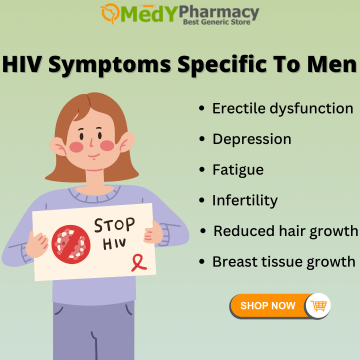
Sores on the penis. Painful open sores or ulcers on the lips or esophagus are a common indication of Human immunodeficiency viruses. They can also appear on the anus and penis. These sores typically return.
- Urethral discharge.
- Pain or other changes with urination
- Ulcers or rashes surrounding the penis or anus
- Rectal discharge, or rectal bleeding
- Pain during sex.
- Pain during a bowel movement.
- Swollen lymph nodes
Psychological factors contributing to ED in HIV-positive males
Pressure to use condoms could potentially affect sexual performance. Some men find that using condoms makes their penis less sensitive to touch, which may contribute to erectile dysfunction. Sexual dysfunction has been associated with less condom use and hazardous sexual conduct, probably for this reason.
In these cases, it is critical to seek therapy that addresses not just the physical causes of sexual problems, but also the psychological causes and effects.
A health provider must obtain a complete sexual history that covers all of these factors. A psychologist’s knowledge may be required in this situation.
Erectile dysfunction: Treatment and Management
If you are having sexual issues, you should have a comprehensive sexual history, a physical examination, and a cardiovascular risk assessment performed. Tests should include measurements of testosterone, blood fats and sugars, and blood pressure.
ED is treated with medications such as sildenafil (Viagra), tadalafil (Cialis), vardenafil (Levitra), and avanafil (Stendra). They function by boosting blood flow to the penis, which increases its sensitivity to touch. They don’t primarily promote sexual desire and only work when you’re sexually active.
If you are already on ketoconazole, Itraconazole, or erythromycin, you should exercise caution with these medications. In some cases, sildenafil and other drugs must be adjusted or discontinued entirely.

How Much Saliva Is Required To Transmit HIV?
Given that saliva cannot carry HIV. This means no amount of saliva may transmit Human immunodeficiency viruses. This virus is classified as a blood-borne disease, although it can also be caught by semen and other sexual fluids.
Saliva is too weak to transmit this harmful virus, but it can also kill it with its chemicals. The only way for saliva to transfer HIV is if it contains blood from someone with HIV and enters someone else’s blood through a cut or a soft place, such as the genitals. However, this is extremely rare and difficult to achieve.
Read more: What should HIV-Positive individuals avoid?
Is HIV preventable?
- Avoiding injecting drugs
- STIs can raise the risk of
- Using condoms or other forms of sexual protection correctly
- Talking with a doctor about post-exposure prophylaxis (PrEP), which can minimize the risk of Human immunodeficiency viruses
Is it possible to contract HIV via anal sex?
From here, the real troubles begin. Specifically, transmission. The likelihood of catching this terrible virus through anal sex or intercourse with an HIV-positive person is extremely high. When we say substantially, we mean about 98%.
The receiver is in a larger danger than the penetrator in this case since the interior of their genital/rectum is fragile and can readily allow the virus to enter during anal intercourse.
The person who penetrates may contract the virus through the hole at the end of their hard-on, the skin that covers the dick (if they are not circumcised), or any scratches or scrapes on their small member.
All of the Possible Ways to Get HIV
So, to make things as simple as possible, we’ve developed a list of the most typical ways to get in trouble with this AIDS drug.
- Blood
- Pre-menstrual fluid and semen
- Fluids within the rectal area
- Fluids inside the vagina
- Breast milk
- Sharing syringes, needles, or other injectables.
- From a mother while pregnant
- Rarely, does oral sex occur.
- Organ transplantation, artificial insemination, or blood transfusion
How Is HIV Not Transmitted?
- Touching
- Handshaking
- Kissing deeply with an open mouth.
- Urine
- Dried blood
- Throughout the air
Take heed of these people; the aforementioned ones do not pose a substantial risk, but there is always a slim potential. To prevent HIV from spreading, always engage in safe sexual conduct, avoid sharing needles, and educate yourself about how Human immunodeficiency viruses cannot spread to dispel myths and reduce the stigma associated with the illness.
Nucleic Acid Test (NAT)
A NAT includes taking blood flow from a vein. It can determine whether you have HIV or how much virus is in your blood. While NATs can detect HIV more quickly than other types of testing, they are very expensive and are not commonly used to screen people unless they have recently had a high-risk exposure or a probable exposure and show early symptoms of HIV.
Last Words:
Male HIV symptoms may include prostates, penile ulcers, prostatitis, hypogonadism, and erectile dysfunction.
Fever, muscle aches, sore throat, chills, and rash are some of the other Human immunodeficiency virus symptoms. In rare circumstances, a person may not feel any symptoms. Blood tests are commonly used by doctors to detect and diagnose HIV.
Medypharmacy is a popular destination for many people looking to learn more about sexual health and save money on medications such as Vidalista 80, and Tadalista 40.
FAQs
1. Does the HIV virus cause the inability to get an erection?
HIV is not a direct cause of ED, however, it can contribute to erectile dysfunction through vascular changes, nerve damage, low testosterone, or side effects of HIV medication and comorbidities.
2. Does antiretroviral therapy (ART) cause ED?
Yes. Some ART regimens can affect mood, energy, and metabolism, which can contribute to ED. In some cases, medication changes can help but should be done under the supervision of a physician.
3. What are the effects of HIV infection on testosterone levels?
HIV infection and chronic conditions can result in secondary hypogonadism (low testosterone) that can occur without libido and result in ED. This can be evaluated through bloodwork and is treated if deemed appropriate.
4. Are PDE5 inhibitors (like Viagra) considered safe for HIV patients?
In general, yes. However, some drug interactions could occur with certain HIV medications (particularly with ritonavir or protease inhibitor based regimens). A clinician should customize counseling and prescribing on this.
5. Should I consult with my physician before initiating medications for ED?
Yes. You should discuss your HIV status, ART regimen, other medications, cardiovascular status, and any physician notes. They can review any interactions and adjust the medication regimen to do so safely.